Claid.ai Alternative: MenuCapture vs Claid.ai for Restaurant Menus
An honest Claid.ai alternative comparison. Claid.ai is an enterprise image API for marketplaces and catalogs; for one restaurant's menu photos, MenuCapture at $9 per week is the simpler fit. July 2026 details.
MenuCapture builds this page, and we make a competing menu-photo tool, so read it with that in mind. Claid.ai is a serious, well-built product, but it is aimed at a different customer than most restaurant owners searching for menu-photo help: it is infrastructure for companies that process images in bulk. This is an honest read on where Claid.ai is genuinely the right call and where a single restaurant is better served by something simpler, using its published details as of July 2026. If you are looking for a Claid.ai alternative because integrating an image API feels like too much for a 50-dish menu, that instinct is usually correct.
The clearest way to read this comparison is by volume. Claid is designed for organizations that handle thousands or tens of thousands of images and want that work automated. MenuCapture is designed for one restaurant handling dozens. Neither is a worse version of the other; they are answers to different questions, and picking the wrong one means either wrestling an enterprise API for a small job or trying to run a catalog through a single-restaurant tool. Knowing which side of that line you are on settles most of the decision.
Who Claid.ai is genuinely good for
Claid.ai is not a weaker version of a restaurant tool. It is a strong version of something else, and it is worth being specific about who it serves.
- Teams that process images at scale. Claid's core offer is an image API: enhancement, upscaling, background operations, and product-photo generation you integrate into your own pipeline. A marketplace can use it to normalize thousands of seller images automatically. That is real infrastructure, and nothing MenuCapture does competes with it at that scale.
- Companies spanning many verticals. Claid serves marketplaces, fashion, e-commerce, automotive, real estate, print on demand, and food. If your catalog is not just food, one platform covering all of it is a genuine advantage.
- Anyone who values enhancement over invention. Claid built its reputation on photo enhancement, sharpening, lighting, and resolution, rather than pure generation. That is the right instinct for images that must stay truthful, and it is the same instinct behind editing a real dish photo.
- Evaluators who want to try before buying. As of July 2026 there is a free trial with 50 web credits plus 50 API credits and no card required. That is enough to run real tests before committing.
Taken together, that is a strong offer for an engineering-led team building image processing into a product. If your problem is "normalize every seller's photos automatically" or "generate product imagery across five verticals from one platform," Claid is a serious answer and the rest of this page is not aimed at you. The mismatch only shows up when the buyer is a restaurant owner rather than an ops team.
Where Claid.ai breaks down for a single restaurant's menu
The pivot is a fit problem, not a quality one. Claid is built for a customer a restaurant is not.
- It is built for developers and ops teams. The value lives in the API and batch tooling. A restaurant owner with a phone full of dish photos is not the target user, and the parts that make Claid powerful for a marketplace are overhead for a single venue.
- Credit accounting becomes a second job. Different operations consume different numbers of credits, web and API plans are billed separately, and monthly plan credits expire at the end of each billing period. That structure is reasonable when you budget for 10,000 images a month. For 50 menu photos it means managing a balance instead of editing pictures.
- Food is one lane, not the specialty. Claid handles food images, but its presets and workflows are generic product tooling built to serve many verticals. A restaurant wants a tool shaped around its one job, not a general platform that also happens to do food.
- High volume means a sales call. Beyond self-serve credits, high-volume pricing is quoted by sales for enterprise contracts. For a restaurant, "talk to sales" is friction where "$9 for a week" is a decision you make in a minute.
It is worth being fair about the free trial here too. Fifty web credits plus fifty API credits is plenty to evaluate whether Claid's enhancement quality is good, and it is. What it does not tell a restaurant is whether the ongoing model fits, because the honest answer for a single venue is that the API and its billing are built for a workload you do not have. A tool being excellent and being a fit for you are separate questions, and Claid is the first without being the second for most restaurants.
What changes when you use MenuCapture instead
MenuCapture is the single-restaurant version of the same enhancement idea: make real photos look professional without a photographer and without a pipeline. There is no integration and no SDK. You upload a photo, type the edit you want in plain words, and download the result about 30 seconds later. Pricing is flat, $9 per week or $159 per year with up to 1,500 edits per month, so there are no credit tiers, no expiring balances, and no sales call. The whole product is tuned to one job: making the dish you actually serve look right on delivery apps, Google, social, and printed menus. Every output is an edit of your real photo, so it stays inside delivery-platform rules and the files are yours on every channel. The example below is MenuCapture's own output.
What MenuCapture's edit looks like
Before
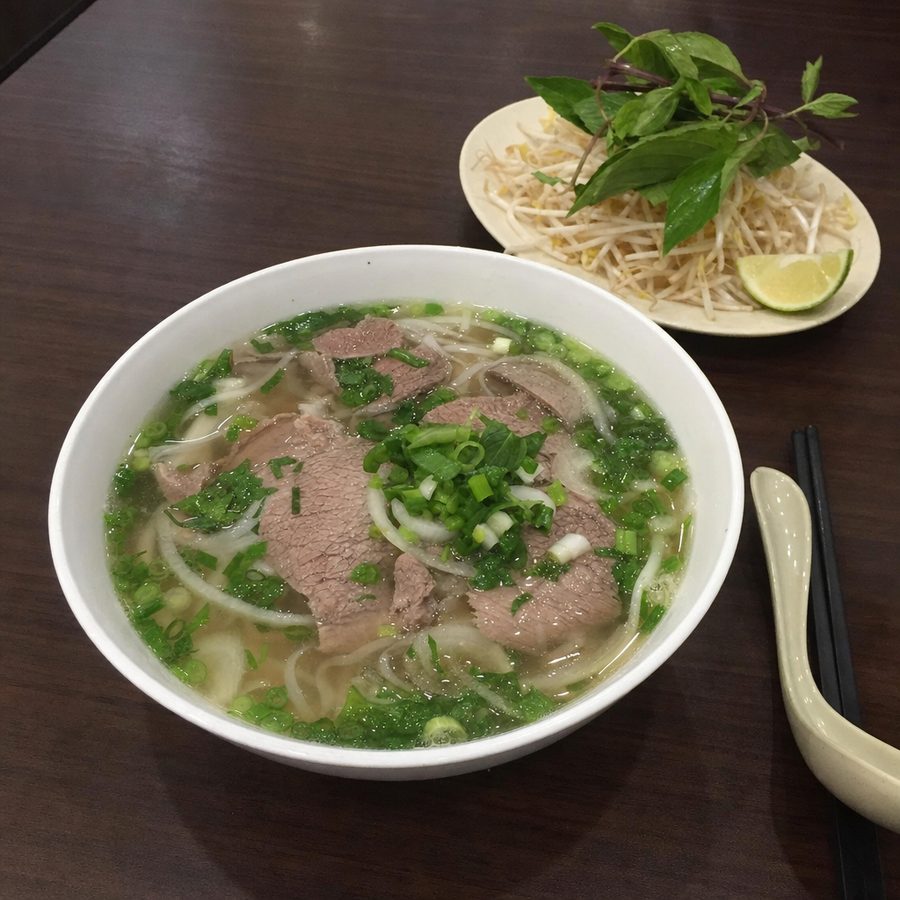
After
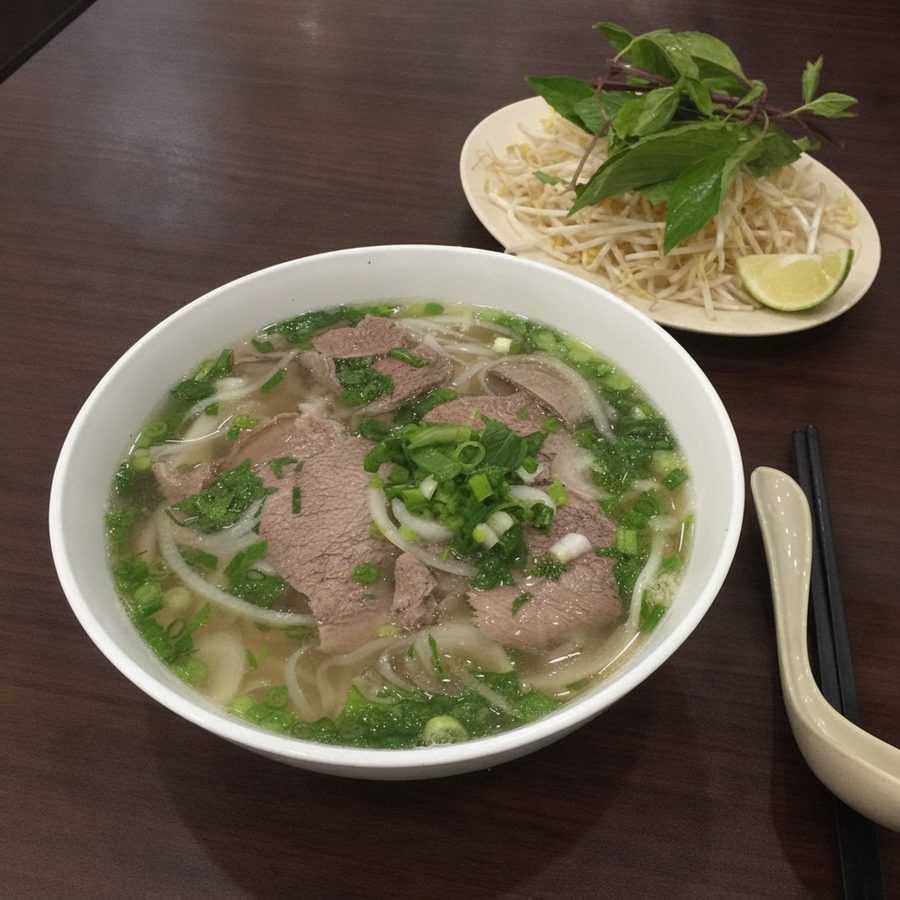
A flatly lit bowl of pho, brightened and color-cleaned with a text prompt while the bowl itself stays exactly as served. Actual MenuCapture output: the original phone photo and the MenuCapture edit. This demo shows our tool, not the competitor's.
That is the Claid.ai vs MenuCapture trade in one image: MenuCapture skips the pipeline and edits the photo directly, and the pricing page shows the flat plan in full.
What an image API actually asks of a restaurant
Claid's web app is usable without code, so this is not a claim that Claid is only an API. But its center of gravity, and the reason it scales the way it does, is the API, and comparing on that footing is fair because it is what distinguishes Claid from a single-purpose editor. Wiring an image API into a real workflow generally means someone manages keys, sends images programmatically, handles the responses, and maintains that connection as things change. For a marketplace with engineers, that is a one-time build that pays for itself across thousands of images. For a restaurant, it is a project with no owner: the person who needs the photos is the same person plating the food, and they do not have a developer on call.
Even on the web app, the credit accounting remains. Different operations cost different amounts and monthly plan credits expire at the end of the period, so a restaurant ends up tracking a balance for a job measured in dozens of photos. MenuCapture removes both layers. There is nothing to integrate and nothing to meter, because up to 1,500 edits a month is simply included in the flat plan. The value Claid earns from scale becomes overhead at a single-restaurant size, and overhead is the last thing a busy kitchen wants between a phone photo and a finished menu image.
Claid.ai vs MenuCapture: the comparison
Claid.ai details are as published as of July 2026.
| Dimension | Claid.ai | MenuCapture |
|---|---|---|
| Built for | Marketplaces, catalogs, API pipelines | Restaurants editing their own photos |
| Setup | API integration or web platform | Upload a photo and type a prompt |
| Pricing model | Credits, plans, enterprise quotes | Flat $9 per week or $159 per year |
| Free entry | Free trial: 50 web + 50 API credits | $9 for one week |
| Credit expiry | Monthly plan credits expire each period | No credits; up to 1,500 edits per month |
| Web vs API billing | Billed separately | One plan covers everything |
| Editing method | Automated enhancement and generation | Plain text prompts on your photo |
| Speed | Built for batch and pipeline scale | About 30 seconds per edit |
| Food focus | One vertical among many | Food-only |
| Support model | Sales-quoted enterprise contracts | Self-serve, no sales call |
Claid's free trial and its multi-vertical reach are real advantages for the right buyer, and its enhancement engine is genuinely strong; the table is not trying to hide that.
Stick with Claid.ai if, switch to MenuCapture if
Stick with Claid.ai if you run a marketplace, a franchise ops team, or a platform that has to process thousands of merchant images automatically, or if your catalog spans several verticals and you want one API to cover all of them. In that world Claid belongs on your shortlist, and MenuCapture is simply not built for the job.
Switch to MenuCapture if you run one restaurant or a small group, your job is menu photos and seasonal updates, and you would rather type an edit than integrate an image API and manage a credit balance. The Claid.ai alternative that fits a restaurant is the tool shaped like a restaurant's problem, not scaled down from an enterprise one. If your honest answer to "how many images a month" is dozens rather than thousands, that alone points you away from Claid, whatever the feature comparison says.
For the rest of the field, the AI menu photo tools roundup covers the category, and the food photography guide explains how to shoot a source photo worth editing.